|
|
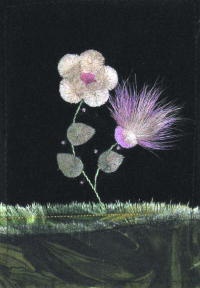
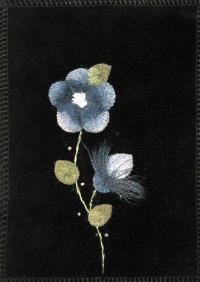
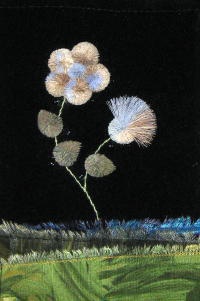



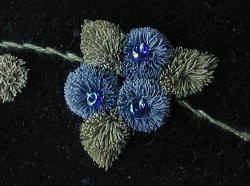







5" x 7"
B571
$120.00
B571
$120.00
5"x7"
M571
$120.00
M571
$120.00
5" x 7"
B572
$120.00
B572
$120.00
Tufted in Cartwright, Labrador by Sandy Sainsbury
Sandy has been making and enjoying crafts most of her life. She grew up in
family that loved to do a variety of crafts for everyone to enjoy. She is an avid
gardner and owns a green house business in Cartwright, Labrador, and a
volunteer in her town. In the winter she spends her spare time at her crafts.
" I learned to do Tufting during the winter of 2007and from then on I was hooked! I love working with the Caribou hair and coming up with many different designs. When I work tufting, I get a feeling of being part of the Labrador Spirit that surrounds me. This is an traditional craft that I hope will be pasted on to many generations to come."
" I learned to do Tufting during the winter of 2007and from then on I was hooked! I love working with the Caribou hair and coming up with many different designs. When I work tufting, I get a feeling of being part of the Labrador Spirit that surrounds me. This is an traditional craft that I hope will be pasted on to many generations to come."
Twisting moose and caribou hair for decorative use is
an old Athapaskan art predating European contact.
However, the craft of tufting did not come into
existence until shortly after World War I. The earliest
documented examples of Dene tufting are from the
1920s and 1930s. It found its way to Labrador and
today only a very few practice the art of tufting. New
techniques in tufting in Newfoundland and Labrador
are credited to Duncan Chisholm, an RCMP officer
who learned the art from an aboriginal elder while he
was working in the North.
Tufting produces soft, three dimensional images by stitching and trimming bundles of selectedcaribou hair on to fabric, hide or birch bark.. Tufting is painstaking work that requires great patience and a sure, steady hand.
Tufting produces soft, three dimensional images by stitching and trimming bundles of selectedcaribou hair on to fabric, hide or birch bark.. Tufting is painstaking work that requires great patience and a sure, steady hand.
Moose hair is the most common material used
for tufting in the northwest, but in Labrador
Caribou hair is the preferred material. The best
hair comes from the shoulders and rump area.
The hair is picked from the pelt by hand and
only the white hair is used. The hair can be
dyed deep jewel tones or left natural to give a
feel of the land. As the hair ends in a dark tip,
only a portion of its length can be dyed.
To create the tufts, about 15-20 hairs are grouped into a small bundle, of uniform size and colour, and laid on the backing material. A thread is passed up through the backing, around the bundle of hair about ¼ inch from the end and back through the backing. The thread is pulled tight, causing the bundle of hair to stand up in a bristly tuft, and then knotted. The hair is cut and the process repeated until the area to be covered is filled. The bundles are placed close together so no division between tufts is visible. The ends of the tufts are trimmed until the desired shape has been sculpted.
To create the tufts, about 15-20 hairs are grouped into a small bundle, of uniform size and colour, and laid on the backing material. A thread is passed up through the backing, around the bundle of hair about ¼ inch from the end and back through the backing. The thread is pulled tight, causing the bundle of hair to stand up in a bristly tuft, and then knotted. The hair is cut and the process repeated until the area to be covered is filled. The bundles are placed close together so no division between tufts is visible. The ends of the tufts are trimmed until the desired shape has been sculpted.
writing adapted from http://www.nwtwildlife.com/
Traditional_Economy/tufting.htm
Traditional_Economy/tufting.htm
Mealy Mountain Gallery
Spend a day with Sandy and Learn how
to make a Tufting Walling